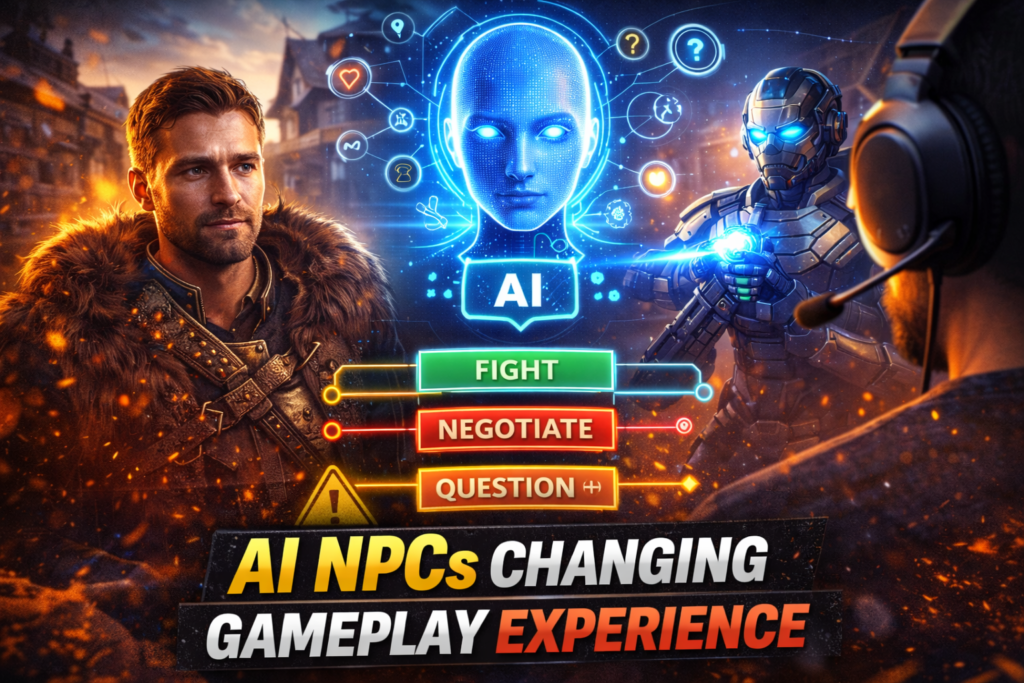
AI-powered NPCs (Non-Player Characters) are no longer just background crowd fillers — they’re becoming dynamic, intelligent, and adaptive parts of modern games. In 2026, AI NPCs are rapidly transforming the way players interact with worlds, stories, and other players. Whether it’s responding like real humans, learning from your choices, or creating unpredictable scenarios, AI NPCs are reshaping gameplay like never before.
🧠 What Are AI NPCs?
An NPC (Non-Player Character) is any character in a game that isn’t controlled by a human player. Traditionally, NPCs follow strict scripts with predictable behavior. But AI NPCs use artificial intelligence to:
- Understand player actions
- React dynamically
- Learn from interactions
- Make decisions on the fly
They’re found in RPGs, shooters, strategy games, open-world adventures, and even online multiplayer systems.
🚀 How AI NPCs Are Improving Gameplay
AI NPCs are improving games in several key ways:
🔹 1. More Realistic Interactions
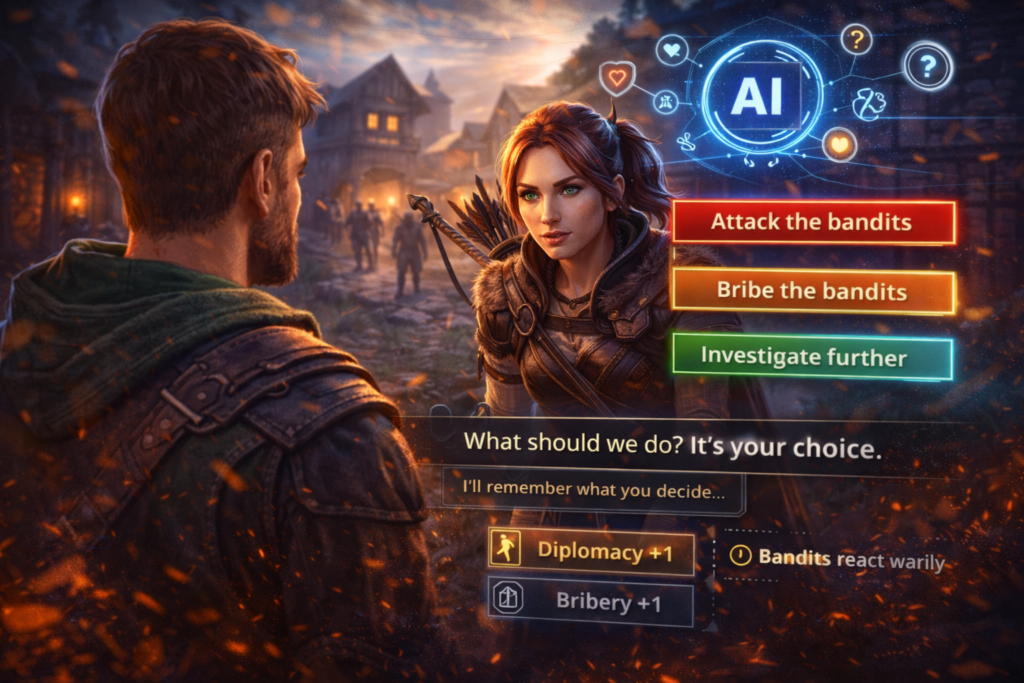
In the past, NPCs often repeated the same lines. Now, AI NPCs can:
- Respond uniquely to player dialogue
- Offer context-based responses
- Adapt tone based on player choice
This makes the world feel alive and reactive.
🔹 2. Dynamic Combat & Strategy
In strategy and action games:
- AI NPCs can flank, regroup, retreat, and adapt
- Enemies learn from player tactics
- Allies provide real tactical support
Gaming feels less predictable and more challenging.
🔹 3. Personalized Storytelling
AI NPCs can:
- Change story paths based on player behavior
- Give missions tailored to play style
- Remember past interactions
Every playthrough becomes unique and personal.
⚠️ What Players Are Complaining About
Even with many positive changes, gamers have also raised concerns.
❗ 1. Unpredictable Difficulty
Some players feel AI NPCs become too tough or inconsistent, especially when AI adjusts difficulty mid-game.
❗ 2. Dialogue That Feels “Off”
AI NPCs can sometimes:
- Misinterpret player intent
- Produce awkward or repetitive lines
- Break immersion with errors
❗ 3. Performance & Resource Use
AI NPC systems often require more CPU/GPU, leading to:
- Lower frame rates
- Longer load times
- Performance drops on older PCs
📊 How AI NPCs Compare to Traditional NPCs
| Feature | Traditional NPCs | AI NPCs |
|---|---|---|
| Behavior Patterns | Predictable | Dynamic |
| Dialogue | Scripted | Contextual |
| Challenge | Fixed | Adaptive |
| Replay Value | Medium | High |
| Performance Impact | Low | Moderate-High |
🧠 Real Gameplay Examples That Changed
🎮 Open-World RPGs
AI companions that remember what you did last session and change quests accordingly.
🪖 Tactical Shooters
Enemy AI that learns your favorite routes and adjusts ambushes.
🧙 Story Games
NPCs that react emotionally based on past choices, changing alliances and outcomes.
🧩 What This Means for Game Design
AI NPCs are redefining how games are built:
- Developers can craft living worlds
- Stories adapt to players, not the other way around
- Challenge and engagement scale automatically
- Games become less static and more organic
However, developers must address:
- Balance between challenge and fairness
- Quality control of AI behavior
- Optimization for performance
🎯 The Future of AI NPCs in 2026 and Beyond
AI NPCs are still evolving. The future may bring:
- NPCs that evolve personalities over time
- Cross-game AI memories
- Better voice and emotional AI responses
- Smarter AI allies that feel like real teammates
What’s clear is this: AI NPCs are here to stay, and they’ll only grow more influential as technology improves.
AI NPCs are reshaping the gameplay experience — sometimes in exciting ways, and sometimes with growing pains. For many players, the shift means more immersive, smarter, and personalized games. For others, it’s a reminder that artificial intelligence, when not fine-tuned, can break immersion or harm performance.
One thing is certain: AI NPCs will continue to influence how we play, interact, and experience game worlds in 2026 and beyond.